Special Perks for Special Healthcare Workers—Like You.
Take advantage of these special FREE resources now available to healthcare workers and first responders.
Companies across New York and across the country are stepping up to support health care workers who are on the frontlines of the fight against COVID-19. Please explore these resources. Thanks for your hard work. You deserve all the help you get!
Allbirds
Allbirds is donating shoes to the medical community. They’ve already given out $500,000 worth.
Email together@allbirds.com for your free pair of wool runners.
Krispy Kreme
Krispy Kreme is offering anyone in the medical community a dozen doughnuts, free of charge. Valid every Monday through May 11.
“Just go to a Krispy Kreme drive-thru and show us your employer badge. That’s it,” the company said. “Pick up some free dozens on the way to work for you and your colleagues, or maybe a free dozen on your way home to family after a long shift.”
Sweetgreen
Sweetgreen is delivering free salads and bowls to hospital workers.
Hertz Car Rentals
Hertz is offering NYC healthcare workers a free rental car, up to 1 month!
Starbucks Coffee
A free tall hot or iced brewed coffee to anyone that identifies themselves as a COVID-19 front line responder through May 3rd.
Uber Eats
Uber Eats has pledged to give 300,000 free meals to first responders and health care workers.
Four Seasons Hotel
The Four Seasons Hotel on 57th Street will provide FREE lodging to doctors, nurses & medical personnel currently working to respond to the pandemic.
The hotel, like many, is closed due to COVID-19 until 4/15. But healthcare workers can call the hotel at 212-758-5700 to book a free room.
Crocs Shoes
Get a free pair of crocs to help you, while you help us alot.
AirBnb
Providing health care professionals, relief workers and first responders free or subsidized housing.
Childcare
Westchester Childcare
All school districts in Westchester County are now providing childcare for children ages 5 to 12 for healthcare workers and first responders with no other childcare options.
New York City Childcare
Regional Enrichment Centers—places where the children of front-line workers can be safely cared for while their parents continue to serve the city in this time of need.
Long Island Childcare
Emergency childcare is available for residents of Nassau and Suffolk County.
For more special perks and discounts, click here.
How to use Facetime to talk to friends and loves ones
How to use Facetime to talk to friends and loves ones
Available to iPhone and iPad users
- In the Facetime app, tap the plus button and type the person’s phone number or email address.
- Tap the number or address, then tap Audio or Video.
- If you have the person’s phone number or email address saved in your contacts, you can start typing their name and tap the name when it appears.
Once you have made the call, the next time you open the app, their name will appear when you open the app. Simply tap on their name.
How to use WhatsApp to talk to your loved ones
How to use Whatsapp to talk to your loved ones
Simple:
- Install Whatsapp on your phone.
- Tap on Whatsapp.
- Tap on the contact you want to call.
- Tap on the movie camera icon.
- You’re on!
How to use Skype to talk to friends and loved ones
How to use Skype to talk to friends and loved ones.
- Check for a webcam.Be sure your computer has a webcam. On most laptops, the webcam will look like a small hole in the top border of the screen.
- Install Skype.Depending on whether or not you have a Mac or a PC, the download link is different.
- For Windows users:Go to this link: http://www.skype.com/en/download-skype/skype-for-computer/. Click on the green button that says, “Get Skype for Windows Desktop.”
- For Mac users:Go to this link: http://www.skype.com/en/download-skype/skype-for-mac/. Click on the green button that says, “Get Skype for Mac.”
- Follow installer instructions.The Skype download should start automatically and the installer will guide you through how to install the program.
- Open Skype.After the program is finished installing, open up Skype. If you have trouble finding the program, follow these instructions for Mac or PC.
- For Windows users:Press your Windows key (left of Alt key), type “Skype” and press ↵ Enter.
- For Mac users:Open up Finder, search for “Skype,” then click on the program
- Click on a contact.In the left side of your screen, you will see a list of contacts if you have added any. Click on the name to open up a conversation with that person.
- If you haven’t added any contacts, you will first have to add at least one. Ask for a friend’s Skype ID, click Contacts in the upper left of the window, click Add Contact in the dropdown menu, then type your friend’s Skype ID.
- Start a video call.To start a video call, you must first be in a conversation with a contact. The instructions are slightly different for Mac and PC users.
- For Windows users:Click on the icon in the upper right corner of the window that looks like a video camera. It should be a blue circle with a white video camera inside.
- For Mac users:Click on the icon in the upper right corner of the window that looks like a video camera. It should be a green circle with a white video camera inside. Depending on your version of Skype, the icon may instead simply say, “Video Call.”
- You may be asked for permission for Skype to use your video camera, click “Allow” if you are comfortable with Skype having access to your camera.
- End the call when done.End the call by pressing the red button on the bottom of the video call window. The icon looks like a red circle with a white phone inside of the circle.
- You may need to move your cursor around the inside of the video call window to reveal the hang-up button.
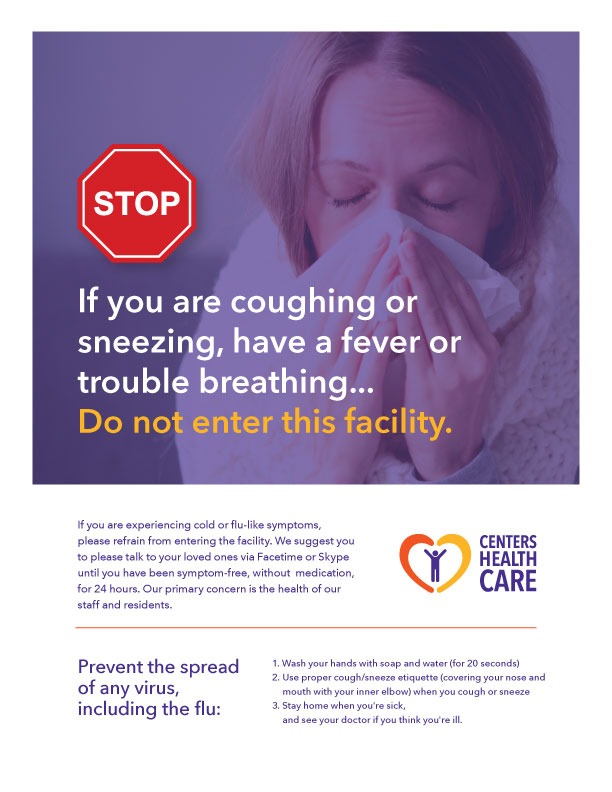
Coronavirus Notice:
Brooklyn Center Highlights Some Common Signs of Wound Infection
At any stage in life, wounds are unfortunate, but infections are worse. In long-term care facilities such as the Brooklyn Center for Rehabilitation and Nursing, we deal with wounds of a slightly different nature, and we have to be especially aware of the signs and symptoms of infection once a wound has occurred. Decreased skin thickness and elasticity, decreased suppleness, longer healing times, and reduced bodily immunity all mean that open wounds appear more often and last longer. This, of course, increases the opportunity for infection.
Elderly patients and patients with compromised mobility suffer more often from wounds related to constant pressure and infrequent changes of position. Because these wounds often appear at points in which the body is frequently in contact with another surface, they can be difficult to prevent until they’ve broken the skin and begun to cause discomfort. Once the body’s protective layer of the epidermis has been broken, there is an increased likelihood of infection. Subsequently, the more time that passes before a wound is sterilized and treated, the higher the risk of infection becomes.
Every open wound should be examined for signs of infection upon discovery. It is important to recognize the beginning of an infect as soon as possible in order to limit the amount of time that infection has to spread through the body, especially in more vulnerable patients such as the elderly. Below are a few common signs for which you can watch in order to stop possible infections at their earliest stages:
- Blistered sores
- Red skin around the site of the injury
- Elevated body temperature either in general or at the site of the wound
- A red streak under the skin that runs toward the heart
- An increase in either pain or swelling days after the injury has occurred
- Excessive pus/seepage or a yellowish crust on top of the wound
Could Tattoos Alert You to Medical Issues? Brooklyn Center for Nursing and Rehabilitation Looks at New Technology
A group of scientists in Germany are experimenting if tattoos can serve as warning indicators on the human body.
The team from the Technical University of Munich is focusing on three biomarkers that would be tied into chemical sensors on the body. The skin would then change colors if a dangerous change or trend is occurring.
Brooklyn Center for Nursing and Rehabilitation would like to detail each of the three biomarkers that are currently being tested on pig skin.
Albumin
A decrease in albumin levels could be a sign of kidney or liver failure.
pH
The tattoo sensor for pH turns from yellow (slightly acidic) to blue (alkaline). Imbalanced pH levels can occur if the lungs or kidneys are malfunctioning.
Glucose
A high glucose level is a sign of diabetes that is uncontrolled. It could indicate to people when insulin doses are needed instead of regular blood tests.
Further Skin Testing
Another tattoo sensor that would be useful is being developed by researchers at the University of Colorado Boulder. The tattoo will only be exposed when it is exposed to ultraviolet (UV) light, so it can be used as an indicator that a person’s sunscreen has worn off.
Finally, for those a bit hesitant about getting a tattoo, even if it is for medicinal purposes, a group at UC San Diego is testing temporary tattoos that serve this purpose. So far, the only one being tested would monitor glucose levels through sweat on the skin.
This particular advancement in medical technology is actually being tested on humans in a clinical trial. The results of the test will be compared to actual blood glucose readings, but even if the experiment is successful, more testing will have to take place before it would be available to the public.
Brooklyn Center Discusses Elderly Wound Care and the Four Stages of Healing
Wound care is an unfortunate reality of elderly life and of continuing treatment at Brooklyn Center for Nursing and Rehabilitation. As we age, our skin thins and loses elasticity, moisture, and the durability to withstand pressure without damage. These compromising conditions mean that aging skin is prone to tearing without being subject to much friction and pressure sores from sitting or laying in the same position for too long. Perhaps even more seriously, weakened immune systems may succumb more easily to infection, potentially resulting in long-term medical complications.
Due to these risk factors, it is essential that caregivers pay close attention to the healing process to ensure that it progresses in the healthiest manner. Below we’ve listed those stages in order, along with a brief description of each.
Stage 1: Coagulation
Coagulation is when liquid, flowing blood clots or congeals to begin forming a semi-solid or solid barrier, halting the flow of blood outside the body. The process is initiated by platelets, but it involves more than 30 types of cells and substances. As platelets and plasma intertwine, they form a type of mesh that works as a framework for the clot.
Stage 2: Inflammation
Because inflammation is often associated with discomfort, and because there is a huge class of medicines designed to control it, people sometimes assume that all inflammation is negative. On the contrary, inflammation is the body’s response to wounds in any effort to remove anything alien or harmful, and it is a positive sign that the body’s automatic healing process is underway.
Stage 3: Proliferation
If you’ve ever had a skin wound that took an amount of time to heal, there’s a good chance you remember it itching at it healed. This generally happens during proliferation, the stage during which the wound is rebuilt with collagen and other binding substances. Blood vessels are created and the edges of the wound are pulled together to close the gap in the skin.
Stage 4: Maturation
This is the point at which the wound fully closes the collagen from the previous stage is transformed, and it is better arranged in a more permanent fashion. Unnecessary water and cellular materials are disposed of at this stage, as well. This stage generally starts after 21 days in healthy individuals, but it may arrive slightly later in elderly patients.
Brooklyn Center for Rehabilitation and Nursing Welcomes Spring with Four Ways Seniors Can Be Active Outside
If your mood has perked up recently, you’re not alone.
Seasonal affective disorder (SAD) is real and affects millions of Americans, especially in the winter months. A lack of sunlight and prolonged times of inactivity indoors are generally the main causes.
It can lead to a feeling of tiredness or low energy, along with more of a craving of foods high in carbohydrates. That can lead to weight gain.
Now that spring has sprung, the Brooklyn Center for Rehabilitation and Nursing wants you to snap out of your funk with four ways seniors can be active outside in springtime.
- Aerobic exercise
Of course, exercise tops the list. More pleasant temperatures and more hours of daylight allow for more walks in area parks and trails. Moving and around and getting fresh air will do wonders for your physical and mental health.
- Outdoor Yoga
Many cities and senior centers offer gentle, outdoor yoga classes that help renew the body and mind. Stretching and deep breathing in the fresh air can further ward off symptoms of SAD and depression in general.
- Volunteer for a charity or festival
Many groups hold outdoor charity events in the spring, and area churches and schools also hold fundraisers and festivals in April and May. Check out your local community calendar and see where you can volunteer to spend some time outside or even just participate in a charity walk to two.
- Go shopping
It’s true — shopping can be good for your health! Outdoor farmer’s markets pop up all over the place during the spring months, as do neighborhood garage sales. Keeping a keen eye for these activities can keep you outside and moving for an entire morning or afternoon without you even realizing it!
The key: get outside and move
While New Year’s resolutions are the cliché, the beginning of spring is a great time to renew your commitment to exercise and get into better health. Now is a good time to develop habits so you can come up with alternative ways of keeping your fitness level up by the time next winter arrives.
Parkinson’s Disease 101 – What is Parkinson’s Disease and how can it be treated?
Today, April 11th is World Parkinson’s Day. British doctor James Parkinson first discovered Parkinson’s disease exactly 200 years ago in 1817. He published an article titled “Essay on the Shaking Palsy” that described the symptoms of the disease that would be named after him. Sadly, Dr. Parkinson was not able to discern an exact cause or a cure the disease, a question that scientists and doctors are still trying to find answers for 200 years later. Some researchers believe that Parkinson’s is genetic like other diseases. Other researchers believe that Parkinson’s may have been caused by a viral infection or an adverse reaction to environmental toxins like pesticides.
Parkinson’s disease affects millions worldwide, impacting mostly the elderly but younger people could still experience symptoms. Famous examples of those that suffer from Parkinson’s disease include actor Michael J. Fox, who had experienced symptoms of early-onset Parkinson’s when he was only in his early 30s, and the late Muhammad Ali, who was diagnosed with Parkinson’s when he was in his 40s due to the repeated blows to the head he experienced throughout his boxing career.
This disease causes irreversible brain cell loss and damage to the central nervous system. The result of this degenerative condition is that less dopamine is produced and the striatum, one of the areas of the brain that coordinates movement, is unable to function properly. Those that suffer from Parkinson’s experience symptoms such as tremors, stiffness, imbalance, and slow movement.
Because there is no cure for Parkinson’s disease, the best way to prevent it from taking over you or your loved one’s life is through treatment. Most treatment options involve restoring the imbalance of neurotransmitters and regulate nervous system operation so your body won’t be making movements against your will. There are several prescription medications that can correct this chemical imbalance. However, if medication is not enough to control symptoms, there are a few surgical procedures that can be an option.
Hopefully one day, we can find a cure for Parkinson’s disease so that surgery or an extensive regime of medication will no longer be necessary for those that have the disease and would like free control over their bodies once more.